
Want more wrestling news, rumors, and results? Be sure to visit PWInsider.com and PWInsiderXtra.com.
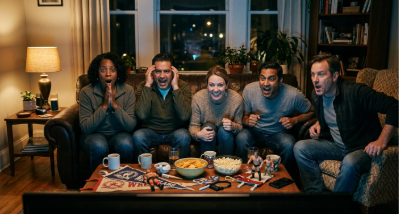
There’s a particular sort of message that can change an entire evening: a late alteration to the match card, a surprise return teased moments before the entrance music hits, or an injury stoppage that leaves everyone wondering what happens next.
In sport, it might be a goal in added time, a last-over wicket, or a fight swinging on one decisive exchange. In wrestling, it could be a wrestler appearing where nobody expected them, a title match suddenly being made official, or a promo that turns a long-running rivalry on its head.
You can catch highlights afterwards, of course. They’re useful, and often brilliantly edited. But they can’t quite recreate that feeling of watching a moment unfold before anybody knows how it ends. That’s the real pull of live events. You’re not simply being shown the story, you’re there while it changes.
Professional wrestling is unusual because the action is built around both athletic performance and ongoing storytelling. As professional wrestling has developed, its biggest promotions have become particularly good at making anticipation feel like part of the main event.
WWE and AEW take different routes at times, but both understand the value of a rivalry that grows week by week.
A short confrontation backstage can plant a question in your mind. A cutting promo can make a match feel personal. Then there’s the small stuff: a stare across the ring, a refusal to shake hands, an old ally appearing at ringside. By the time the major card arrives, fans haven’t just been told that two people are facing each other. They’ve spent weeks debating why it matters.
That’s why the live broadcast remains important, even when clips circulate within minutes.
Wrestling crowds don’t quietly observe. They react, argue, sing, boo, cheer and sometimes change the atmosphere of a match altogether. A planned moment may land differently in front of a loud arena than it did on paper. A performer who was expected to be jeered might receive a huge welcome. A slow opening can suddenly become gripping when the audience senses a comeback.
That response shapes how viewers at home see the action too.
When an arena rises to its feet before a finishing sequence, you feel the shift through the screen. When thousands go quiet after a nasty-looking landing, it gives the moment weight. Even the chants that divide opinion are evidence of a communal experience happening in real time.
Major WWE cards, listed through the company’s official event coverage, often work because they balance established rivalries with the possibility that something new could begin. AEW has a similarly conversation-led approach across its events and weekly shows, where rankings, alliances and challenges can move quickly.
The match itself matters, naturally, but pacing is just as important. A wrestler spending several minutes under pressure, a near fall that convinces half the room it’s over, or a brief pause before a decisive move all create space for reaction. It’s hard to duplicate that shared uncertainty once you already know the result.
The connection between wrestling fans and sports fans is stronger than people sometimes assume. Both groups know that the best events produce moments that can’t be fully planned for at home.
Combat sports are perhaps the clearest example. A bout can appear settled after the opening rounds, only for one competitor to adjust their approach and alter the contest completely. The tension comes from seeing the plan work, fail, or change under pressure. A referee’s intervention can end things in seconds, leaving viewers to replay what happened and ask whether the call was right.
A football match may be shaped by one defensive error. Cricket can turn on a remarkable catch or a spell of disciplined bowling. In tennis, momentum can move from one player to another within a handful of points. These aren’t merely entries in a results list. They become the moments supporters remember when discussing the event on the way to work the following morning.
Live viewing gives every decision a sense of possibility:
Will a substitution alter the shape of the match?
Can a fighter recover after a difficult round?
Has a referee made the correct call?
Is the crowd sensing a turnaround before the commentators do?
Will the final few minutes change everything?
The debate starts before the final bell
A memorable event rarely ends when the broadcast does. It moves straight into group chats, post-match interviews, short clips and long discussions between people who saw the same thing from different angles.
One fan may focus on a technical performance. Another will remember a reaction from the crowd. Someone else will insist the turning point came much earlier than everyone realises. That difference of view is half the fun.
Social clips have made these conversations faster, but they haven’t made live viewing less relevant. If anything, they’ve made it more valuable. The person who watched in the moment can add context that a 20-second clip misses: what was said beforehand, how the match had been building, or why a particular entrance caused such a stir.
It’s also why instant rankings are everywhere after major shows. Fans immediately begin comparing title matches, debating the best performances and working out where a surprise return sits in the bigger picture. The debate can be heated, but it’s usually rooted in a shared memory of a moment that felt important as it happened.
Not every fan can be in the arena, and that’s fine. At-home viewing has its own appeal.
For many of us, a big event means sorting out the sofa, checking the start time, muting notifications that might reveal something early and deciding who’s allowed to talk during the entrances. It’s a modest ritual, but it turns an ordinary evening into an occasion.
Watch parties bring the atmosphere closer too. You might have one person who knows every detail of a WWE rivalry, another who follows AEW closely, and somebody who mainly turns up for the biggest bouts. That mixture can make the night better. There’s room for the expert explanation, the baffled question and the collective shout when something unexpected happens.
Second-screen discussion is now a huge part of the experience. Fans swap reactions in group chats, follow official updates, and see what other viewers thought of a controversial call. The trick is finding a balance. You don’t want your phone to distract from the event, but it can make a quiet living room feel connected to a much wider audience.
Real-time hosted formats have helped shape that habit beyond arenas and stadiums. People enjoy having a presenter, commentators or fellow viewers reacting alongside them. It gives the evening a sense of company, even if you’re watching alone.
Remove the divider and the commercial gambling block entirely, so the article continues directly from the live-viewing discussion to the following section.
## UK adults only: separate live-hosted entertainment
For eligible UK adults interested in a separate live-hosted format, explore live casino online on Virgin Games.
18+ only. Gamble responsibly. This is a commercial link and is separate from the sports and wrestling discussion in this article.
Highlights are brilliant for catching up, revisiting a favourite sequence or sharing a standout moment with a friend. They have their place. Yet they remove the waiting, the uncertainty and the collective intake of breath that make live events feel special.
That’s especially true with wrestling, where a storyline can change in a single segment, and with sport, where no script can account for a late swing in momentum. The defining moment is often not the one everyone expected. It’s the interruption, the recovery, the unexpected decision or the performance that grows as the event goes on.
People keep coming back because live events ask you to pay attention. Something could happen at any point, and when it does, you’re part of the first wave to see it, react to it and talk about it.
For fans, that shared sense of “did you just see that?” is difficult to beat.
If you enjoy PWInsider.com you can check out the AD-FREE PWInsider Elite section, which features exclusive audio updates, news, our critically acclaimed podcasts, interviews and more by clicking here!