Want more wrestling news, rumors, and results? Be sure to visit PWInsider.com and PWInsiderXtra.com.
There’s a particular feeling that arrives when a major wrestling show is a few weeks away. The card starts to take shape, a rivalry gets that bit more personal, and every episode suddenly feels as though it might contain the moment that changes everything.
The show itself matters, of course. But for many fans, the build is its own spectacle.
A championship match isn’t just two names on a poster. It’s the unanswered question of whether the champion can hold on, whether a former ally will finally turn, or whether a surprise appearance is waiting around the corner. Wrestling works because it asks viewers to invest in characters and consequences, and the countdown gives those ideas room to breathe.
Professional wrestling has always mixed athletic performance with serial storytelling. As Wikipedia’s overview of professional wrestling notes, promotions use personas, rivalries and dramatic narratives alongside in-ring action. That blend is exactly why the weeks before a big show can feel so alive.
The first batch of announced matches is often only the beginning. A major card tells fans what they can expect, while leaving plenty of room for doubt.
Will the advertised main event remain unchanged? Could a contender earn their way into the match? Is a tag team starting to show cracks at precisely the wrong time?
Those questions give weekly television, online clips and live events added weight. One backstage confrontation can alter how a match is viewed. One hard-fought win can make a challenger look credible. One carefully delivered line in a promo can turn a fairly straightforward contest into the match everyone is talking about.
Fans don’t simply count down the days. They read the signs.
Sometimes that means spotting a character’s new edge. Sometimes it means noticing a camera lingering on a title belt, a tense handshake, or a glance between former friends. None of it needs to be over-explained. In fact, wrestling is often at its most enjoyable when viewers are allowed to join the dots themselves.
A satisfying big-match build rarely relies on a single ingredient. It’s a combination of confrontations, setbacks, reminders of old history and, ideally, a proper reason for two people to want to settle matters in the ring.
Across WWE, AEW and independent promotions, the methods differ, but the aim is familiar: make the viewer feel that the match belongs on the biggest possible stage.
A strong promo can do more for a contest than a dozen graphics. It tells you what the match means to the people involved.
Perhaps the challenger feels overlooked. Perhaps the title-holder believes they’ve outgrown everyone around them. Maybe the issue is more personal, built around betrayal, respect or a previous defeat that never quite went away.
The best promos don’t just raise their voices. They reveal character. A quiet, controlled response can be as memorable as a shouting match, especially when it makes you wonder what someone is planning.
It’s why promo analysis has become such a familiar fan pastime. People replay a segment, pick apart a line, and ask whether a wrestler sounded confident or worried. That is part of the entertainment, not a distraction from it.
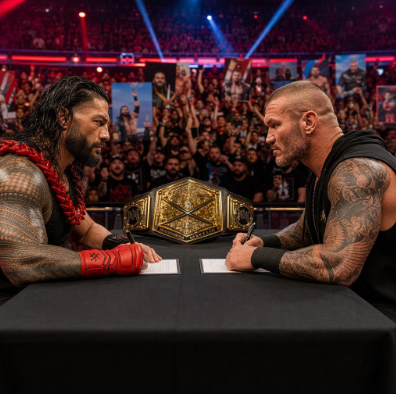
In ordinary life, signing an agreement is hardly gripping television. In wrestling, it has a remarkable habit of becoming chaotic.
A contract signing puts opponents face to face, often with a desk positioned rather optimistically between them. It can provide a final verbal exchange before the match, confirm the stipulation, or show just how difficult it is for rivals to remain in the same room.
The format is familiar, yet fans still watch because the details change. Who stays composed? Who makes the first move? Is someone trying to provoke a mistake before bell time?
A well-cut video package can turn even a casual viewer into someone emotionally invested. It gathers the key moments, trims away the filler and presents the rivalry as a complete story.
Old footage is particularly useful when a match has a long history behind it. A previous title match, a partnership that fell apart, or a rivalry revived years later can all add texture. Suddenly, a match isn’t just about one evening. It carries the memory of what came before.
Major promotions make these videos available through their own platforms, including the official WWE site and AEW’s official website. They’re useful places to revisit confirmed announcements rather than relying on clipped, context-free posts.
Few things get wrestling fans chatting like the possibility of a return. A familiar name disappears from television, an old theme is mentioned online, and suddenly every entrance feels like it could be significant.
Speculation can be enjoyable when it’s treated as speculation. That distinction matters.
A rumour isn’t a report. A fan-made graphic is not an official announcement. A vague social post may mean something, or it may mean very little. If a promotion hasn’t confirmed it, the sensible approach is to say so plainly.
That doesn’t spoil the fun. It keeps it fun. You can still wonder, theorise and laugh at wildly ambitious predictions without presenting them as fact.
A major event is rarely a solitary appointment. Even viewers watching from the sofa tend to make it a shared occasion in one way or another.
Prediction threads appear days, sometimes weeks, in advance. Friends compare cards in group chats. Someone will insist a certain entrance is unbeatable, while someone else will produce a very persuasive alternative.
There’s no correct way to enjoy it, but the rituals are recognisable.
Comparing predictions, from obvious picks to complete long shots
Comparing views on the announced card before the event
Revisiting classic matches involving the featured talent
Debating entrance themes, ring gear and possible match order
Muting social feeds if you’re watching later and want to avoid results
Returning online afterwards to discuss the decisions, surprises and standout performances
I find that predictions are more entertaining when they’re about story logic rather than pretending anyone has inside knowledge. What has the promotion actually shown? What loose ends remain? Which outcome would create the most interesting next chapter?
That kind of discussion makes the build feel communal. It also explains why the post-show conversation can last for days. A major event may end after a few hours, but fans are still weighing up its meaning long afterwards.
With so much material floating around, it helps to have a simple way to separate confirmed information from chatter.
Official promotion channels are the best place to check a card, broadcast details, talent announcements and clips from recent shows. WWE’s show listings and AEW’s roster page, for example, can help you establish basic context before you go searching elsewhere.
Independent promotions often use their own websites and verified social channels for event updates. Check the date on any post, particularly if the card has been adjusted.
Results pages are handy if you missed the show or want a quick record of what happened. They can also help you find the key fallout segment on the next programme.
Still, reading results is not quite the same as seeing the match play out. Crowd reaction, pacing and the small choices performers make often explain why a result landed well, or why it left fans divided.
If a feud refers to an old team, a former championship reign or a match from another promotion, a little background reading goes a long way. Official profiles, archive footage and reputable interviews can fill in the gaps.
The key is to keep labels clear:
Confirmed: announced by the promotion or shown on its programming.
Reported: attributed to a named, credible source, with appropriate caution.
Speculation: fan discussion and theory, not established fact.
That small habit makes wrestling coverage far more useful, especially during a hectic build.
## Advertisement
For UK readers aged 18+ seeking a separate responsible-play promotion, explore Jackpotjoy’s Wheel of Joy. Terms and eligibility apply; gamble responsibly.
This is independent advertising and is not connected with wrestling coverage, promotions, talent or event outcomes.
The end of a major show is often the start of its next story. Results settle one question but create several more.
A new champion needs a first challenger. A defeated wrestler may have to rebuild. A team that failed on the big night might finally split, or perhaps find a renewed sense of purpose. Then there are the backstage interviews, post-match comments and following-week segments that reveal what mattered most.
That is the clever rhythm of wrestling. The final bell offers a payoff, but it also resets anticipation.
Fans return to results coverage, watch interviews, revisit clips and debate what should happen next. Before long, a new match is announced, another rivalry starts to simmer, and the familiar feeling returns.
The big show is the destination. The countdown, with all its theories, promos, arguments and shared reactions, is the journey fans never really want to skip.
If you enjoy PWInsider.com you can check out the AD-FREE PWInsider Elite section, which features exclusive audio updates, news, our critically acclaimed podcasts, interviews and more by clicking here!