
Want more wrestling news, rumors, and results? Be sure to visit PWInsider.com and PWInsiderXtra.com.
Although they appear as different costs, a monthly streaming bill and an amount taken out of an online sale represent the exact same business inquiry - how do you want to make money off a digital service? The answer will impact your revenues, your customer’s bill and how the consumer uses the digital service. There are three primary ways to monetize a digital service by charging for continued access, completed transactions or consumed units.
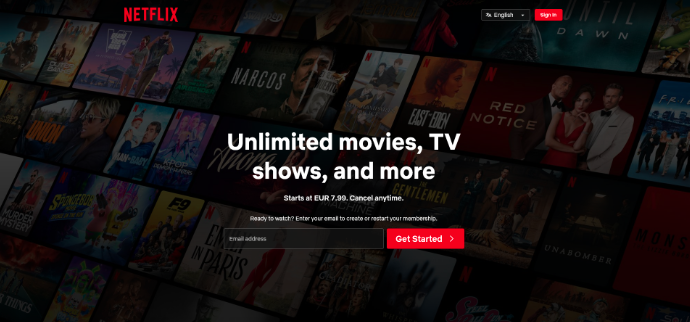
Access is charged based upon time (e.g., Netflix) – if you watch more episodes within a month you don’t receive additional charges for those additional episodes – instead you’re paying for ongoing access to your chosen plan. Ongoing recurring payments allow businesses to forecast revenue; however, this revenue relies on subscribers continuing their subscription. Thus, although acquiring new subscribers is important for maintaining your user base – retaining existing users is equally critical. Therefore, providing a valuable catalog or reliable software applications becomes a component of the revenue stream.
The customer faces a trade-off when using a digital service: predictable expenses versus actual usage. For example, a monthly plan may provide convenience for a person who utilizes a specific tool daily, whereas, utilizing such a tool twice a year could be extremely costly.
A commission relates to the platform’s revenue as much as it does the transaction. For example, in addition to the displayed item price, Etsy’s transaction fee includes all additional shipping and gift-wrapping costs. Both percent (the rate) and dollar amount (how many dollars each percent applies to) matter. Therefore two services that have the same percent can bill the sellers vastly different amounts based on how they define the dollar amount.
When you do pay a commission style fee, there is motivation for the operator to make sure the event occurs. Examples include search functions, checkout processes, and mechanisms to resolve disputes. However, just because the operator has a motive to allow events to occur does not mean that the platform decisions will benefit every single seller.
Fee structures similar to commissions also exist outside of retail. The fee charged for hosting an ordinary cash game can be calculated as a percentage of its pots, as the CoinPoker fee schedule illustrates. The maximum rake depends upon stakes. Rake pays the operator to host the game. This demonstrates why the total amount of money that moves through a platform should never be confused with the amount of money generated by the platform.
The effect of a fee cap is another way to calculate. At that point, no matter how large an amount increases under the original base, once the max fee has been paid, that specific fee cannot exceed its current level. If you compare only percentages without limits or limitations then you are comparing only half of the price.
Use-based pricing charges per unit of consumption. Examples include stored data, compute time, or messages delivered. As an example, Amazon S3 charges separately for storage and other components (requests and data transferred). Retrieving your files each day, versus simply storing those same files, is an example of two distinct uses of the services.
Using this model can benefit businesses who have workloads that vary significantly. For example, if you start a new small project; it will likely consume less than a larger allowance. Conversely, when you enter a heavy usage phase; you will pay more for the usage.
As stated previously, the way consumption is measured is important. The company providing a service which is priced by number of successful deliveries is selling a different product than the one priced by total number of attempts at delivering the service.
Therefore, a useful pricing scheme has clearly defined units of consumption and clearly defined historical records of actual consumption. Each individual charge should relate back to a recognizable event to create an association for the customer. Providing estimates and alerts along with providing definitions for what constitutes minimum charges can assist in making a flexible/variable price more understandable for both parties involved. While an alert does not constitute a spending limit; it can provide early warnings regarding potential excessive usage.
Many pricing pages combine models. Shopify has separate lists of payment-related costs (third party transaction fees). Using a hybrid model allows a business to price customers based upon different levels of usage. A base cost can be charged to allow for continued access to the service, with additional costs being applied on top of this base cost as the customer uses more resources. This method can provide the business with a way to offset ongoing costs without having all customers incur the costs associated with the largest consumer.

The difference between pricing options should be compared by creating two real-world examples, i.e., a less active month and a more active month. Examples of inputs include: total # of accounts, total # of completed sales, total amount of stored data, etc. When comparing the results of both months for both pricing plans you can see at what point one plan will begin to cost more than the other.
There isn't a single model that is inherently fairer or cheaper. What triggers payments? What do customers receive? How does the customer's billing change as their behavior changes? Once you understand those three things your pricing page becomes much clearer because you have a good idea of what is going on in terms of how the business is providing services.
If you enjoy PWInsider.com you can check out the AD-FREE PWInsider Elite section, which features exclusive audio updates, news, our critically acclaimed podcasts, interviews and more by clicking here!