
Want more wrestling news, rumors, and results? Be sure to visit PWInsider.com and PWInsiderXtra.com.

AEW launched in 2019, challenging WWE and increasing competition. Today, streaming deals with platforms like Netflix and Peacock provide stable revenue. Social media connects promotions directly with fans, while greater athleticism, the Women’s Revolution, and diverse rosters continue shaping the industry.
Leading promotions invest heavily in search engine optimization, content marketing, and direct audience relationships — exactly as companies in the highly competitive gaming industry turn to specialized poker SEO services to dominate search results and reach targeted traffic. New monetization models include subscription services, virtual meet-and-greets, and NFT collections. Wrestlers maintain personal brands on Instagram and TikTok. The product has fully evolved from weekly television shows into a year-round global entertainment brand that adapts faster than ever to technological and cultural shifts.
Professional wrestling first appeared in carnival sideshows and vaudeville houses between the 1880s and 1920s. Promoters billed matches as legitimate athletic contests to draw paying crowds. By the 1930s the shift to predetermined finishes became standard. Kayfabe — the strict rule that wrestlers must protect the illusion of reality at all times — governed every public interaction until the 1980s.
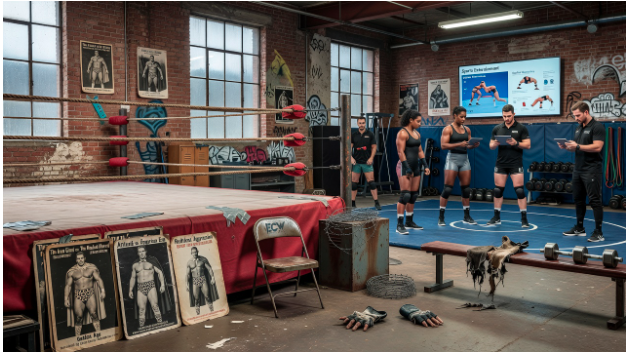
In 1948, major promoters created the National Wrestling Alliance. The NWA established a territorial system that divided North America into exclusive regions. This structure delivered two clear advantages. Territories cultivated intense local loyalty and built regional stars who felt like hometown champions. However, the same system created fundamental limitations. Wrestlers rarely gained national exposure. Promoters remained small operations unable to expand beyond state borders. The entire model relied on an unwritten gentleman’s agreement that no one would invade another’s territory.
One man deliberately shattered that agreement. Between 1982 and 1984 Vince McMahon Jr. bought out regional contracts, signed top talent, and expanded the WWF nationally. The move destroyed the territorial system that had lasted four decades.
McMahon launched WrestleMania in 1985. The event drew 19,000 live fans to Madison Square Garden and reached millions more on closed-circuit television. Hulk Hogan became the face of the expansion. His larger-than-life persona connected with mainstream audiences in a way territorial champions never could. WWF merged wrestling with pop culture through MTV crossovers, rock star appearances, and celebrity involvement. Mr. T, Cyndi Lauper, and Muhammad Ali appeared at WrestleMania 1. The product moved decisively from regional sport to brightly colored television entertainment. Ratings soared. Merchandise sales exploded. The foundation for modern wrestling business was set.
The Monday Night Wars defined the second half of the 1990s. WCW Nitro and WWF Raw competed head-to-head in prime time. Nitro beat Raw in ratings for 84 consecutive weeks between 1995 and 1998. Both companies pushed boundaries to capture attention.
WWF countered with the Attitude Era. Stone Cold Steve Austin, The Rock, and D-Generation X delivered sharp, adult-oriented storylines filled with rebellion, profanity, and anti-authority themes. The content reflected the cultural mood of late-90s America. Peak episodes drew 8.1 million viewers. Wrestling briefly became one of the most dominant forces in American pop culture. Pay-per-view buyrates reached record levels. The era produced catchphrases, merchandise lines, and moments that still resonate with fans in 2026. It also marked the last time two major national promotions fought for supremacy on weekly television.
The landscape changed overnight in 2001 when WWE purchased its rival WCW and later ECW. The acquisition created a near-monopoly. WWE introduced the brand extension in 2002, splitting its roster between Raw and SmackDown with separate storylines, championships, and creative teams.
A new generation of performers emerged. John Cena, Randy Orton, Batista, and Brock Lesnar received major pushes. Storytelling grew more sophisticated with longer character arcs and improved production values. Behind the scenes, executives began preparing for a cleaner public image. The company reduced blood, toned down sexual content, and shifted focus toward broader marketability. These internal changes set the stage for the most controversial strategic pivot in WWE history.
Summer 2008 brought the official transition to PG rating. The decision followed Chris Benoit’s tragic death, steroid scandals, and pressure from advertisers and sponsors. WWE executives wanted corporate partnerships and access to family audiences.
John Cena became the flagbearer of the new direction. His merchandise generated hundreds of millions in sales while older fans criticized the safer content. During the same period the women’s division received increased focus and longer matches. International expansion accelerated. WWE opened offices in multiple countries and translated content for global markets. The PG Era laid crucial groundwork for digital growth. The company built a younger, wider fanbase and strengthened its brand in ways that later enabled massive streaming deals.
The history of professional wrestling proves one clear lesson. Those who adapt to new technologies, audience expectations, and business realities survive. Those who cling to old models disappear. From carnival tents to Netflix home screens, the industry has shown remarkable resilience. The next era will likely be defined by even deeper integration of virtual experiences, international talent pipelines, and fan-driven storytelling. The only certainty is continued evolution.
If you enjoy PWInsider.com you can check out the AD-FREE PWInsider Elite section, which features exclusive audio updates, news, our critically acclaimed podcasts, interviews and more by clicking here!