
Want more wrestling news, rumors, and results? Be sure to visit PWInsider.com and PWInsiderXtra.com.
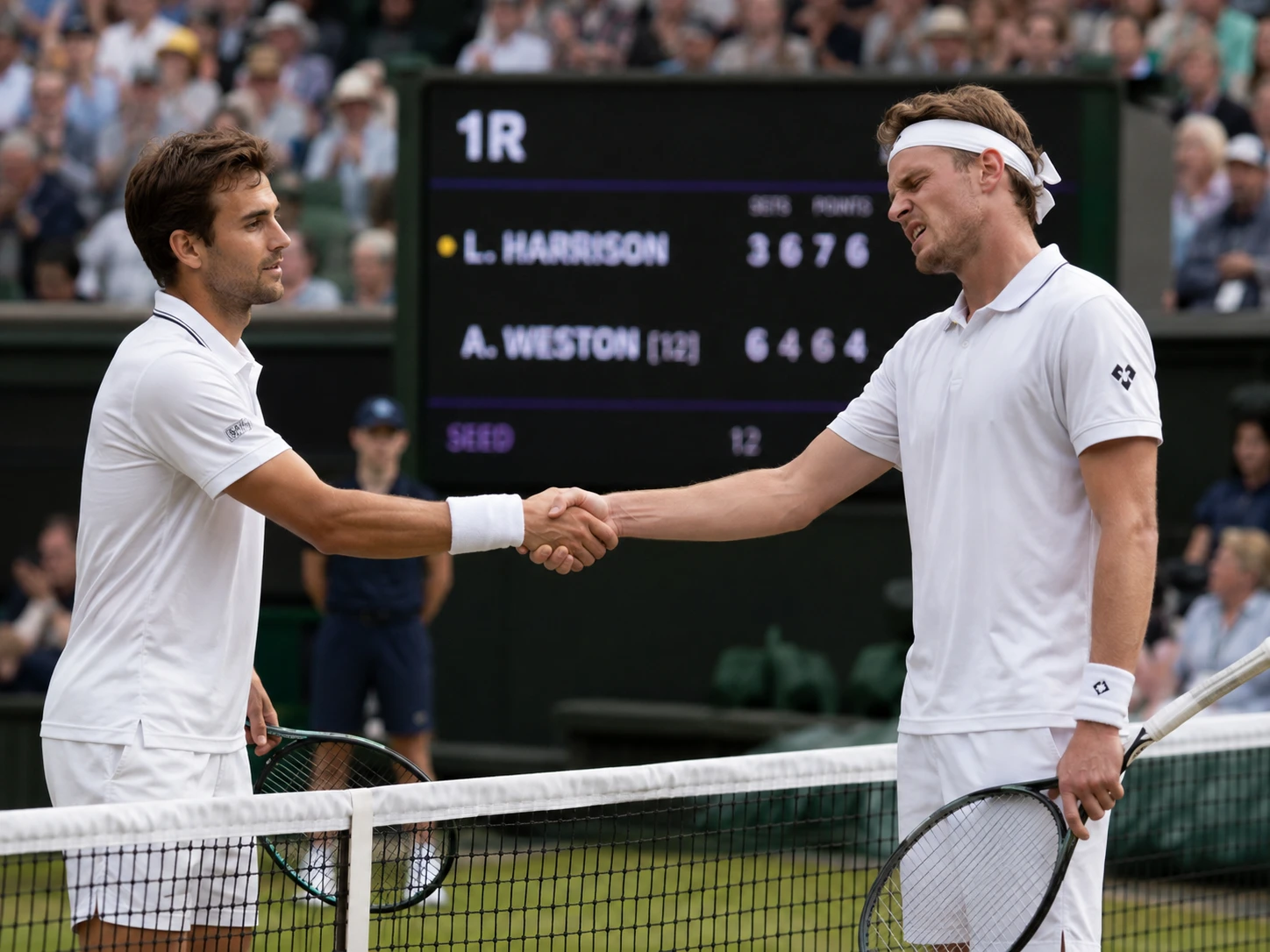
The first round of a Grand Slam is routinely described as a minefield. The phrase is convenient, but the evidence from the three completed seasons between 2023 and 2025 suggests a more uneven reality. Some tournaments lose a cluster of leading names before the draw has properly settled; others produce remarkably orderly opening days. The risk is real, yet it does not arrive at the same level in every event.
That distinction matters because “upset” is often used too loosely. A famous player losing is not automatically a statistical shock, and an unseeded player winning is not always a surprise to anyone who has followed recent form. Seeds are placed in separate sections of a 128-player draw to prevent the leading players from meeting too early, but seeding does not guarantee an easy opponent. Grand Slams use 32 seeds in each singles draw, leaving many dangerous players outside that protected group.
Looking across 2023, 2024 and 2025, the clearest lesson is not that first-round chaos is constantly increasing. It is that the scale of disruption depends on the tournament, surface, draw and preparation window. The contrast between the 2024 Australian Open and Wimbledon 2025 is particularly revealing: one produced exceptional survival among the men’s seeds, while the other delivered a record-level exodus.
The 2023 season offered several first-round results that still stand out. At Roland Garros, Brazilian qualifier Thiago Seyboth Wild, ranked No. 172 at the time, defeated second seed Daniil Medvedev in five sets. Medvedev arrived in Paris after winning the Rome title and carrying a six-match clay-court winning streak, yet Seyboth Wild attacked with conviction and completed the biggest victory of his career after more than four hours.
That result was dramatic because of the gap in ranking, status and recent form. It was also a reminder that a seed number cannot eliminate a difficult stylistic matchup. Medvedev had improved significantly on clay, but the surface still offered a lower-ranked opponent enough time to use his forehand, move forward and disrupt the favourite’s preferred rhythm.
The US Open later produced a concentrated group of high-profile exits. Three Top 10 seeds disappeared in the first round: men’s No. 4 Holger Rune and women’s No. 7 Caroline Garcia and No. 8 Maria Sakkari. Rune lost to Roberto Carballes Baena, who had never previously beaten a Top 10 opponent in 13 attempts. Garcia then fell to Wang Yafan, while Sakkari was beaten on the opening day.
Those departures shaped the early narrative in New York, but they did not amount to the destruction of the seeded field. Headlines naturally focus on recognisable casualties; a full assessment must also consider how many seeds survived. The 2023 examples therefore show why individual shocks should be separated from tournament-wide volatility.
The men’s first round at the 2024 Australian Open was unusually stable. Only two seeded players, No. 18 Nicolas Jarry and No. 31 Alexander Bublik, failed to advance. Thirty of the 32 men’s seeds reached round two, the highest total at a Grand Slam since the 32-seed system was introduced at Wimbledon in 2001.
That record is especially interesting because the matches themselves were not routine. The opening round featured long contests and a record number of five-set matches decided by a final-set match tiebreak. In other words, competitive tension did not automatically translate into seeded defeats. Favourites were repeatedly pushed, but most found a way through.
This distinction is frequently missed in discussions about upsets. A difficult match is not the same as an unexpected result. A seed may lose two sets, spend four hours on court and still advance. From the perspective of the draw, order has been preserved even though the favourite may already have paid a physical cost that affects later rounds.
The Australian Open example warns against assuming that every season must be more unpredictable than the last. A few points in separate matches can move the number of first-round casualties sharply. Thirty men’s seeds surviving did not make the ranking system perfect; it meant the protected players repeatedly survived the pressure.
Elsewhere in 2024, first-round shocks returned. At Wimbledon, lucky loser Giovanni Mpetshi Perricard defeated No. 20 seed Sebastian Korda in four sets. The result reflected more than ranking position. Mpetshi Perricard’s enormous serve was particularly dangerous on grass, while Korda entered after a strong run and therefore carried greater expectations.
It also shows why surface-specific performance deserves more attention than a simple ranking comparison.
If Melbourne 2024 was the orderly extreme, Wimbledon 2025 was the opposite. Twenty-three of the 64 seeds across the men’s and women’s singles draws were eliminated in the opening round: 13 men and 10 women. The men’s total set a Wimbledon record and tied the 2004 Australian Open for the most seeded men to lose in the first round of a Grand Slam.
The list included major names. Third seed Alexander Zverev lost in five sets to Arthur Rinderknech, who went through the entire match without dropping serve. Coco Gauff, Jessica Pegula, Lorenzo Musetti and Daniil Medvedev were also among the prominent early casualties, turning the opening two days into something much larger than a collection of isolated surprises.
More than one third of all seeds were gone before round two. The disruption affected both draws and materially changed possible routes through the tournament.
For anyone using TennisPredictions.ai or conducting an independent match analysis, Wimbledon 2025 offers a practical warning: seed numbers should be treated as one input, not as a protective shield. Grass form, the speed of adaptation, recent workload and the opponent’s playing style may be more revealing than general ranking strength during the first days at the All England Club.
Wimbledon’s position in the calendar helps explain why its opening round can be unusually volatile. The clay season is long, physically demanding and ends with Roland Garros. Players who go deep in Paris have limited time to recover, switch their movement patterns and prepare for a surface used for only a short part of the year.
Coco Gauff pointed to that quick turnaround when discussing the 2025 wave of defeats. Players must decide whether to compete immediately on grass, rest after Roland Garros or enter a warm-up event close to Wimbledon. None of those choices guarantees ideal preparation.
Grass also magnifies certain matchup problems. A powerful server can keep sets close even against a much higher-ranked opponent. Shorter rallies reduce the time available for a favourite to establish superiority, while a small number of return points can decide a set. Movement is different, low balls can expose technical discomfort, and players with limited recent grass experience may need time they do not receive in a knockout match.
The 2025 figure was exceptional, but it confirms that the first round on grass deserves a different analytical approach from Melbourne, Paris or New York.
One reason first-round upsets can appear more surprising than they really are is the depth of modern Grand Slam fields. Only 32 players are seeded, while each singles draw contains 128 competitors. The unseeded group can include former champions, players returning from injury, fast-rising prospects and specialists whose ranking does not fully reflect their ability on the current surface.
Rankings are also based on results accumulated over time. They cannot perfectly capture a recent improvement, a decline in physical condition or a sudden change in form. A young player may arrive with a level that is already higher than the number beside their name. A well-known seed may be protecting points earned under very different circumstances.
The 2025 Australian Open offered an example when 20-year-old Alex Michelsen defeated No. 11 seed Stefanos Tsitsipas in the first round. Michelsen later beat another seed, Karen Khachanov, in the third round, showing that the opening result was not simply a one-match accident.
At the 2025 US Open, world No. 82 Renata Zarazua defeated sixth seed Madison Keys after recovering from a set and a break down. Keys entered as the reigning Australian Open champion but committed 89 unforced errors and 14 double faults. In the men’s draw, Benjamin Bonzi beat No. 13 Daniil Medvedev in five sets, repeating his first-round victory over Medvedev from Wimbledon two months earlier.
These results show how reputation can obscure current competitive reality. A major champion may remain vulnerable in a particular matchup, while an unseeded opponent may already be playing above their ranking.
The period from 2023 to 2025 does not support a simple story of rising chaos. Instead, it shows wide variation.
In 2023, several memorable first-round shocks involved Top 10 players, including Medvedev at Roland Garros and Rune, Garcia and Sakkari at the US Open. In 2024, the Australian Open men’s draw produced the strongest first-round seed survival of the 32-seed era, even though many matches were highly competitive. Then Wimbledon 2025 swung dramatically in the other direction, losing 23 seeds across both draws.
That sequence prevents overreaction. A wave of defeats does not prove that rankings no longer matter, just as an orderly opening round does not mean leading players are untouchable.
Seeds still win most of their opening matches. They are seeded because their longer-term results place them among the strongest players in the field. Yet the first round remains a vulnerable stage because there is no opportunity to recover from a slow start, unfamiliar conditions or a difficult matchup.
A useful assessment of first-round risk should begin with the draw, but it cannot end there. Several contextual factors can make a seeded player more vulnerable than the ranking suggests.
Preparation is one. A player returning from injury may have limited match practice. Someone who reached a final the previous week may be confident but fatigued. A competitor changing surfaces may possess excellent season-long numbers that have little relevance to the conditions of the current tournament.
Style is another. Big servers can compress matches into tiebreaks. Strong returners can expose a favourite’s second serve. Left-handed players may create unusual patterns against opponents with limited preparation time. On clay, patience and movement can neutralise a more aggressive player; on grass, a few dominant service games may keep an outsider within reach of an upset.
Match format also matters. Best-of-five tennis gives the stronger player more time to recover but can turn an awkward start into a physical test. In the women’s best-of-three format, a poor opening set leaves far less room for correction.
The number of seeded defeats is a useful starting point, but it should not be treated as a complete measure of unpredictability.
First, not all seeds are equal. Losing the No. 3 seed has a greater effect on the projected draw than losing No. 31. A count that places both results in the same category can hide the true scale of disruption.
Second, a seed may be only a narrow favourite. A loss by No. 28 to a dangerous unseeded opponent may be labelled an upset, even when the difference in expected win probability is small.
Third, withdrawals, retirements and injury-affected performances require context. The official result remains a defeat, but it may not tell us much about the relative playing level of the two competitors.
Men’s and women’s draws should also be considered separately before being combined. Match format, depth and surface effects can produce different patterns within the same tournament. The value lies in comparison: orderly Melbourne, volatile New York in selected years and extraordinary Wimbledon in 2025.
Grand Slam seeding creates structure, not immunity. It keeps the leading players apart, but it cannot protect them from a bad matchup, an underprepared transition or an opponent playing above their ranking.
The data from 2023 to 2025 capture both extremes. At the 2024 Australian Open, 30 of 32 men’s seeds survived. At Wimbledon the following year, 23 seeds across both singles draws were eliminated. Between those poles came individual shocks that changed tournaments and careers.
The practical lesson is straightforward. A first-round forecast should not begin and end with the number beside a player’s name. It should ask whether the favourite is healthy, prepared for the surface and tactically suited to the opponent. It should also recognise that an unseeded player may be far more dangerous than the draw makes them appear.
Upsets will always dominate the headlines because they overturn expectation. But the three-season record shows that the more interesting story is not simply how often seeds lose. It is why one Grand Slam opening round remains stable while another unravels within two days.
If you enjoy PWInsider.com you can check out the AD-FREE PWInsider Elite section, which features exclusive audio updates, news, our critically acclaimed podcasts, interviews and more by clicking here!