
Want more wrestling news, rumors, and results? Be sure to visit PWInsider.com and PWInsiderXtra.com.
You just paid to slab that PSA-10 Undertaker, but one bad drop can still scuff the holder and shave dollars off the grade. A purpose-built case fixes that: rigid walls absorb impact, UV-safe lids fight fade, and dense foam stops slabs from rattling on the road or the shelf. This guide compares seven proven options—premium display vaults, budget bulk boxes, flight-ready tanks, and a DIY Pelican build—so you can pick the right armor for your wrestling grails without worry.
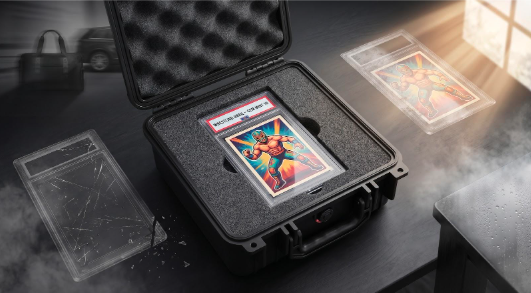
We tend to treat a PSA or BGS slab as the finish line. The card is sealed, the grade is locked, the value feels safe. In practice, collectors lose thousands each year when the holder itself collects hairline cracks or surface scratches.
Plastic can still scar. A clear shell that rubs against other slabs in a loose box picks up micro-scratches that cloud the view, and buyers notice the “damaged holder” long before they admire your Cena autograph.
Light and moisture do slow harm. Ultraviolet rays creep through windows and bleach ink. Humid air slips past slab seams, warping thick stock and fogging inner walls. By the time labels appear hazy, the damage is done.
Travel movement adds another threat. A weekend drive to WrestleMania or a quick shuffle at trade night can make a slab tap a corner and start a fine stress line. The label might still read 10, yet the market sees an eyesore.
A purpose-built case fixes these risks. Dense foam prevents rattle, rigid walls soften impact, and UV-safe lids block fade. Add a simple gasket to seal out summer humidity and you get insurance for your insurance, the layer that keeps a perfect 10 looking perfect.
Scan the grid below to match a case to the way you collect, then jump to its full review.
|
Case (best for) |
Slab capacity* |
Protection call-outs |
Price tier |
Stand-out perk |
|
Vaulted 4-Row Display Vault (premium display) |
112 PSA / 80 SGC / 76 BGS |
Hard shell, dense foam lanes, dual combo locks |
Mid-high |
Clear lid option turns storage into a showcase |
|
Preza 3-Row Graded Box (budget high capacity) |
108 PSA / 78 BGS |
Aluminum corners, keyed lock, foam spacers |
Low |
Holds three-figure slab totals without a three-figure cost |
|
Case Club 4-Row XL (maximum rugged) |
108–196 slabs (brand dependent) |
Waterproof polymer, pre-cut foam, padlock rings |
Low |
Military-grade shell plus a pressure valve for flights |
|
CASEMATIX 40 (carry-on travel) |
40+ mixed slabs |
Airtight seal, impact foam, padlock holes |
Low |
Fits under an airplane seat yet shrugs off rain |
|
Zion “Slab Case X” (style forward) |
70–110 mixed slabs |
Tough poly shell, built-in combo locks |
Mid |
Color options that pop like a WrestleMania entrance |
|
SlabMag (single grail) |
1 slab |
Aluminum frame, UV-blocking window, magnetic clasp |
Low |
Turns one prized card into desk art |
|
DIY Pelican/Apache (custom fortress) |
Variable |
User-cut foam inside a Pelican-style gun case |
Low–mid |
Infinite layouts if you enjoy a weekend foam-cutting project |
*Capacities are listed for standard PSA holders. Thicker BGS or SGC slabs reduce the count slightly. Each maker publishes mixed-slab numbers so you can estimate accurately.
Start with the shell. Thin plastic flexes when a suitcase lands on it and passes that impact straight into your slabs. Choose rigid polymers or aluminum-reinforced frames instead; they absorb the shock so your cards stay safe.
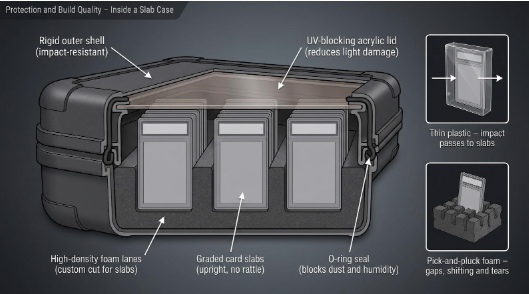
Inside, foam does the real work. Pick-and-pluck cubes feel handy, yet they tear, shift, and leave gaps. Collectors who upgraded to Case Club cases say the custom-cut channels “are so much better than pick and pluck foam,” because every slab stays locked in place even after a road-trip jolt (blowoutforums.com).
Density also matters. High-density polyethylene cradles each holder without letting edges bite into the material. It springs back after compression, so slots stay tight for years. Low-density foam flattens over time, and that slack invites movement, the sworn enemy of a pristine holder.
Finally, look for environmental seals. An O-ring around the lid blocks humidity and dust. Some display-focused cases replace solid lids with UV-blocking acrylic, trimming light damage while keeping the view clear. When you see these features combined—a hard exterior, precision foam, and a dependable seal—you know the case is built to guard six-figure grails, not merely carry them.
Count your slabs before you click “add to cart.” A stylish case that holds only 40 cards feels cramped once your next break lands. The opposite problem is paying for a 200-slot giant when you own a starter stack; the extra space just eats cash and shelf room.
Check published numbers first. Preza’s three-row box lists 108 PSA slabs or 78 thicker BGS slabs with foam inserts in place, according to the maker’s specifications. That gap shows why dimensions matter: PSA holders are slim, SGC and BGS add bulk, and a mixed load steals a few slots as foam compresses unevenly.
Project forward. If you grade ten cards a month, a 40-slab travel case fills in one season. A 100-slot briefcase buys breathing room for a full year of returns plus space for show trades.
Compatibility goes deeper than raw count. Compare interior width, depth, and row height to your grader’s specs. TAG and CGC slabs run slightly thicker than PSA; Zion’s standard Slab Case X hugs PSA and BGS but steers SGC users to the XL model. Measure once, regret never.
One more trick: stash a few foam spacers. Slide them between half-filled rows to stop lean and tip until the collection grows into the space. This simple add-on keeps corners pristine.
A slab case does more than stop scratches. It also keeps wandering hands off four-figure cardboard when you set the case down for a minute.
Start with the latch. If you can lift the lid without effort, look elsewhere. Quality cases snap shut with a clear click and refuse to pop open when a stack of binders lands on top.
According to Preza, the company builds a keyed cylinder into its three-row box and ships two spare keys for backup. Keys beat plastic tabs, though you still need to remember where you put them.
Combination latches raise the bar. Vaulted and Zion add tumblers to the clasps, so you set a code and skip the keychain. At conventions you can open the case for a buyer, spin the dials, and browse other tables with peace of mind.
Padlock loops finish the checklist. Hard shells from Case Club or Pelican leave room for TSA-style locks. Clip on a travel-approved shackle, send the case through security, and no agent has to force a latch.
Match the security level to your routine. Trade nights with friends may need only a firm snap-shut. National shows or cross-country flights deserve metal hardware, combo codes, and a padlock slot. Your slabs are worth the extra layer.
A slab case protects only the cards you carry. Weight, handle design, and shape decide whether you grab the case for a quick trade night or leave slabs at home.
Start with weight. Large vaults can tip the scale at about eight pounds empty. Add one hundred slabs and you are hauling close to a bowling ball. That works for shelf storage but feels heavy when you move between hotel ballrooms. Lighter shells like the CASEMATIX 40 weigh about two pounds before loading, so you can slip it into a backpack and breeze through security.
Handle ergonomics come next. Zion stiffens its suitcase-style grip because a fully loaded two-row case passes ten pounds. A thin plastic handle digs into fingers, while a rubber-wrapped bar saves your knuckles during a half-mile convention walk.
Consider footprint, too. Airline cabins prefer square cases that slide under a seat. Waterproof travel options follow this rule, keeping depth low so you do not wrestle overhead bins. Oversized four-row trunks, on the other hand, call for checked-bag treatment or a rolling cart.
Finally, look for a pressure valve. Airtight hard cases need a way to equalize cabin pressure. Twist the valve open before take-off, close it after landing, and the latches release without a pry bar.
Match these mobility factors to your routine. If most trades happen at the local shop, size matters most. If you fly to national shows, choose the case that passes TSA lines as smoothly as a fresh slab reveal.
Slab cases once hid in closets. Not anymore. Modern designs double as mini showrooms, so decide how visible you want those rainbow-foil parallels.
For shelf appeal, pick finishes that sit comfortably next to framed posters or replica belts. Vaulted offers a matte black shell with brushed-metal latches that catch light without yelling for attention. Zion swings the pendulum, selling carbon-fiber prints and bold colors that echo a wrestler’s ring gear. Either way, a tidy exterior turns storage into décor.
Interior layout matters just as much. Straight foam lanes keep slabs upright and evenly spaced, creating an instant lineup when you lift the lid. Clear-lid upgrades go further, letting you enjoy the cards without opening the case. Think trophy cabinet, not toolbox.
Spotlight pieces need extra flair. Slip a grail card into a SlabMag and the aluminum frame adds a gallery-style border while blocking UV light. Stack a few on an acrylic stand to create a rotating marquee for your desk.
Choose a look that makes you smile each time you walk past the case. When storage doubles as display, you spend more time engaging with your collection—half the fun of the hobby.
Vaulted 4-Row Display Vault graded card case product photo
Think “jewelry briefcase,” then fill it with 112 slabs of wrestling history. The rigid composite shell pairs with metal latches that click shut like a bank safe. Inside, four precision-cut foam lanes cradle PSA, BGS, or SGC holders upright and evenly spaced, turning the open case into a mini gallery.
Collectors praise the dual-purpose design. Closed, it stacks neatly for transport. Open, it props the rows at a gentle angle for easy browsing, and an optional clear lid keeps dust out while still showing off the cards. Vaulted lists more than a dozen Display Vault variations—from compact two-row minis to wall-mount “Air” frames—so you can browse the full collection and zero in on the exact size and finish your stack demands.
Security comes standard. Both latches use programmable combination wheels, so you travel key-free but thief-resistant. Spare foam spacers tighten half-filled rows until your next grading return fills the gap.
The Vaulted costs about what you would pay for a mid-tier PSA 10, yet if your collection already tops four figures in market or sentimental value, the upgrade feels more like asset protection than a splurge.
Preza 3-Row graded box budget high-capacity case photo
Need to corral a growing slab stack without emptying your wallet? Preza’s aluminum briefcase hits the mark.
Three foam-lined lanes hold 108 PSA cards or 78 thicker BGS slabs, according to the maker’s specs. That fits a full Prizm WWE rainbow with room for your next grading return. Removable spacers keep a half-filled row tight so slabs stay upright.
Protection exceeds the price. A lightweight shell with reinforced corners shrugs off bumps during the walk from parking lot to show floor. Inside, dense foam dividers stop face-to-face contact, and the built-in keyed lock provides basic security. Close the lid, snap the latch, turn the key, and you are set.
The case doubles as a display. Stand it upright, tilt the lid back, and three tidy rows invite browsing at trade night. If you slab often and like to show off, this is the most cardboard you can shield per dollar.
Limitations? The case is not water-sealed, so avoid heavy rain. Thin aluminum panels may dent if treated like checked luggage. For shelf storage, road trips, and local shows, though, Preza delivers big-case capacity at a small-case cost.
Case Club 4-Row XL rugged graded card case product image
Card shows can feel like a contact sport. When you need gear-case toughness, Case Club answers.
The outer shell uses the same impact-resistant polymer found in military equipment. Drop it on concrete and the slabs inside stay safe. A rubber gasket circles the lid and earns an IP67 rating, so rain, spilled soda, and shallow puddles never reach your cards.
Open the dual-stage latches and you will see why forum veterans praise this box. Each slot is laser-cut, not pick-and-pluck. One collector wrote, “The custom foam in the Case Club cases is fantastic… so much better than pick and pluck” (blowoutforums.com). Every slab sits in its own chamber with finger notches for easy removal, stopping edge rub and collisions.
Capacity adjusts with holder type. Slim PSA slabs fit up to 196, while thicker BGS or SGC slabs land around 108. High-density polyethylene rebounds after compression, keeping rows snug.
Travel features seal the deal. A pressure valve equalizes cabin changes so the lid never vacuum-locks at altitude, and twin padlock hasps accept TSA-friendly locks.
The trade-off is weight. Empty, the case weighs about eight pounds, and a full load can push twenty. If you ship a five-figure collection or drive cross-country to WrestleMania weekend, those extra pounds buy real peace of mind. Few options offer better slab insurance on the go.
Card shows mean crowded halls, sudden rain, and tight airline rules. The CASEMATIX travel case is built for that chaos.
A hard polypropylene shell feels like a mini Pelican: light enough for a backpack, stout enough to survive a curb drop. Inside, one long foam track with movable dividers holds forty PSA slabs or a tidy mix of thicker BGS, SGC, and one-touch mags.
Protection is the headline. A rubber O-ring circles the lid, giving the case an IP-rated waterproof seal. A built-in pressure valve vents air during cabin ascent, so the seal never fights you after landing.
Collectors love the grab-and-go ergonomics. The fold-flat handle feels secure, and twin padlock holes accept TSA-approved locks. Loaded, the case still fits under an airplane seat, keeping your grails in sight for the whole flight.
The main trade-off is capacity. If you carry full sets, forty slots disappear fast. For show weekends where weight, weather, and airport security conspire against cardboard, though, CASEMATIX earns its spot on the packing list.
Some collectors want storage that pops like a WrestleMania pyro cue. Zion delivers color, texture, and solid protection in one package.
A three-row interior holds about 110 PSA slabs or seventy-five thicker BGS slabs. Precision-cut foam keeps each holder snug, even if your mix includes one-touch mags. Zion notes that SGC slabs fit tightly here; dedicated SGC users should look at the XL+ model.
Looks steal the spotlight. Carbon-fiber prints, bright “Cube” patterns, and limited-run colors turn an ordinary briefcase into hobby flair. Drop one on a trade-night table and people ask what is inside before they spot the cards.
Combo-lock latches provide basic security, and a reinforced handle prevents flex when fully loaded. The shell is not water-sealed, so treat it like luggage, not dive gear, yet the rigid poly walls shrug off daily bumps.
Bottom line: Zion offers mid-size capacity, solid protection, and the chance to match your case to your favorite superstar’s gear. If you want storage with personality, this is your pick.
SlabMag magnetic holder single-grail display frame photo
Every collection has a crown jewel, such as a PSA 10 rookie Rock or a one-of-one Undertaker autograph. SlabMag treats that card like gallery art.
The two-piece aluminum frame snaps around your graded slab. Strong magnets pull the halves together, and a safety latch stops accidental separation. A clear front panel adds a scratch-resistant layer and filters UV light, so ink stays vibrant under office lamps.
Drop resistance improves because the metal shell absorbs impact before it reaches slab corners. Frames come in matte black, bright red, championship-belt gold, and more, turning the border into part of the display. Place one on a desk easel or mount it on the wall; visitors notice instantly.
Cost lands around thirty dollars per piece, so you will not wrap a hundred cards this way. For the single card that owns your hobby heart, SlabMag delivers museum vibes and everyday armor in one sleek package.
Off-the-shelf cases rarely match every wish list. If you need space for graded slabs, one-touch displays, and loose autos in the same box, go DIY.
Pick a shell. Hobbyists favor the Pelican 1520 or the budget-friendly Apache 3800 from Harbor Freight. Both use thick polypropylene walls, include a weather seal, and feature padlock rings right out of the box.
Plan the layout. Sketch rows on closed-cell polyethylene foam; it resists crumbling and cuts clean. Carve channels the width of a slab, peel the plugs, and you have lanes spaced exactly for PSA on one side, chunky BGS on the other, and a corner well for supplies.
Mind the budget. A forty-dollar Apache case plus twenty dollars in foam can house about 120 slabs—less than half the price of a purpose-built vault with similar capacity.
Finish and maintain. Add silica packs, label the rows, and check fit each season. Closed-cell foam rebounds after compression, keeping slots snug for years.
DIY gains: infinite layouts, serious savings, and the satisfaction of a one-of-one slab fortress that travels as hard as any brand-name tank. Downside: sweat equity. Measure twice, cut once, and expect a practice pass on spare foam before you slice the real grid.
Will these cases fit every slab brand?
Yes. Each pick lists supported graders, and all handle PSA and BGS out of the box. Vaulted and Case Club carve foam wide enough for SGC, TAG, and CGC, while Zion suggests its XL model for SGC. When in doubt, measure your thickest slab with a millimeter ruler and compare it to the maker’s interior specs.
How do I fly with my graded cards?
Carry them on, never check. Waterproof hard cases such as CASEMATIX and Case Club include a pressure-release valve; crack it open after take-off and landing to equalize the seal. If a TSA agent requests inspection, spin the combo dials or unlock the padlock, let them look, and relock before you leave the line.
Do I need silica packs inside a waterproof case?
A sealed O-ring blocks new humidity, but it also traps the air inside when you close the lid. Place one or two rechargeable silica packets (10–20 g each) in the case and dry or replace them every three months to prevent condensation rings or label fog.
How much capacity is “enough”?
Count today’s slabs, add your average monthly grading returns, then pad by twenty percent. A collector who submits ten cards per month will outgrow a 40-slot travel case in four months. A 108-slot Preza briefcase leaves space for a full year of new PSA slabs.
Can I stack cases safely?
Hard shells with flat lids, such as Vaulted, Preza, Pelican, and Case Club, stack like building blocks. Place a sheet of foam or a microfiber cloth between two clear-lid display vaults to avoid scuffs, and keep the stack below shoulder height unless the bottom case is rated for heavy loads.
What is the single best upgrade after buying a case?
Soft sleeve every slab. Precision-fit sleeves stop surface rub inside the foam and keep fingerprints off plastic. They cost only a few cents each and add a second barrier before anything touches that pristine PSA label.
Protecting graded WWE cards doesn’t end when the label says 10. Matching your collecting style—display, bulk storage, or travel-ready armor—to the right slab case preserves condition, market value, and, most importantly, the fun of the hobby. Use the comparisons and tips above to choose a case that shields your wrestling grails today and for years to come.
If you enjoy PWInsider.com you can check out the AD-FREE PWInsider Elite section, which features exclusive audio updates, news, our critically acclaimed podcasts, interviews and more by clicking here!