
Want more wrestling news, rumors, and results? Be sure to visit PWInsider.com and PWInsiderXtra.com.
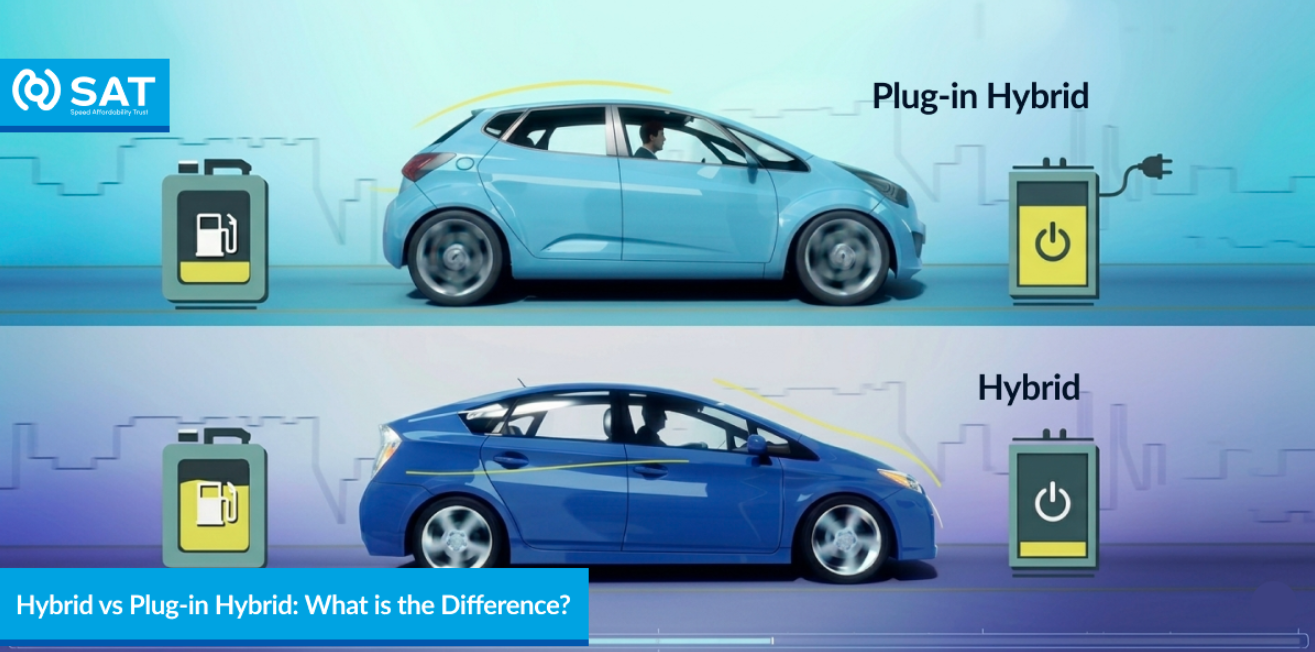
This is a conversation every car buyer in America is having right now. Gasoline is costly, the government is continuing to debate emissions, and the dealer showroom is overrun with green-badged cars whose names sound like computer updates rather than cars. In all that clatter is one question that is genuinely useful. Hybrid vs Plug-in hybrid: which one really makes sense to you? It is not difficult to answer once someone explains it properly. So let us do that.
A standard hybrid is a combination of a petrol engine, an electric motor, and a small battery pack. The trick is that it never requires plugging in. The battery is charged by a process known as regenerative braking and is recovered each time you slow down. It also gets charged by the petrol engine when excess power is available. The electric motor assists the petrol engine during acceleration and completely replaces it at low speeds and in heavy traffic. The result is significantly improved fuel economy compared to a pure petrol car, especially in urban environments, where constant braking charges the battery.
Toyota has more or less pioneered the modern hybrid with the Prius way back in 1997, and the formula has not been radically altered since. It is effective and dependable, and it does not require the driver to do anything extra. It works like any other car; you fill it up at the petrol station, and the system takes care of the rest. The shortcoming is that the electric-only range is small, with a mile or two at very low speeds before the gasoline engine kicks in. A hybrid is essentially a petrol-powered car that consumes electricity to work more efficiently. Nothing more, nothing less.
A plug-in hybrid vehicle, also known as a PHEV, uses the same formula as a hybrid but with a much larger battery that you recharge from an external power source, just as in a fully electric car. When you plug it into a wall socket at night, or a public charging point during the day, you will wake up with a purposeful electric-only range, usually between 20 and 50 miles, depending on the model. Within that electric range, the petrol engine remains dormant. You are running on electricity, so zero tailpipe emissions and running costs that are a fraction of those from petrol. After the battery is exhausted, the car acts like a typical hybrid: the petrol engine propels it, with the added help of electric power to ensure the car is moving.
The appeal is self-evident. For someone whose daily commute is within the electric range, a PHEV will last for weeks without a visit to a petrol station and still offer the reassurance of a full tank for long trips. It is the nearest equivalent of an electric car without the range anxiety that continues to deter many buyers of fully electric cars. Complexity and cost are the trade-off. PHEVs are technologically more advanced than typical hybrids, and this translates into a higher purchase price. They are also designed for a certain type of driver: the type who charges regularly and drives in a predictable manner. For a person who only charges every now and then and drives long distances, the additional battery is dead weight, and the fuel economy benefit is largely lost.
Let us bring this to a comparison. Running costs. A typical hybrid conserves fuel, and it always does so. A PHEV will save much more, provided you charge it. A PHEV powered solely on petrol would have poorer fuel economy than a normal hybrid due to the extra weight of the heavy battery it is not using.
An ordinary hybrid requires nothing beyond regular maintenance and petrol. PHEV requires a charge station at home or on hand. In case you do not have a 1-to-1 parking space in an apartment or cannot find a public charger in a small town, the benefits of a PHEV become significantly less.
Purchase Price
PHEVs are more expensive to purchase. The bigger battery pack and other electric components cost more, and the difference is real, whether purchasing a new one or searching for used cars on sale in the USA.
Tax Incentives
Historically, for this reason, PHEVs have received more generous federal and state tax treatment in America compared to standard hybrids, specifically due to their electric-only capability. This has the power to significantly bridge the price disparity, depending on your location and the time of purchase.
Both are smoother and more refined than pure petrol cars. An electric PHEV is quieter, and its reactions are more immediate. A typical hybrid is more predictable, in that the switching between electric and petrol power happens without your input.
Standard hybrids have an outstanding long-term reliability record, particularly Japanese ones. Toyota hybrids, in particular, have accumulated hundreds of thousands of miles in taxi and ride-share fleets around the world with remarkably few drivetrain issues. PHEVs are newer technology with a shorter track record, though the early evidence is encouraging.
To the right purchaser, yes. With a daily commute of less than 40 miles and a home charging point, if you can afford the higher purchase price, a PHEV can offer running costs that are significantly lower than those of any petrol car and lower than a typical hybrid. The maths work in your favor, and they work consistently. Unless you can charge regularly, make long, random journeys, or have convenient access to a charging station, a regular hybrid will certainly be more beneficial to you.
It is cheaper, less demanding of you, and gives its efficiency benefits without you having to alter your routine in any way. The honest answer is that asking whether plug-in hybrids are worth it is not the right question to pose in the abstract. The correct question is whether you have the driving habits a PHEV is designed to accommodate. The answer is yes for a good number of American drivers, especially those in cities and suburbs with reasonable access to charging.
This is something to consider if you are buying a hybrid or PHEV, and the value sits high on your list of priorities. The Japanese have been producing hybrid cars longer than anyone. Toyota, Honda, and Nissan have decades of experience developing hybrids, and this experience is reflected in long-term reliability statistics. Japanese used cars exported through established used-car exporters in Japan, such as SAT USA, provide American consumers with access to that engineering at a price that the home market can hardly match.
The domestic Japanese market is a constant source of low-mileage, well-maintained hybrid cars that enter the export market in perfect condition. Japan has a very stringent domestic inspection system, and as such, these cars are well-maintained during the initial ownership period. They are accompanied by comprehensive condition statements and independent auction grades that offer a degree of transparency which many American used car deals lack.
No matter which type of hybrid you settle on, sourcing through a reputable exporter gives you access to cars for sale in USA through a channel that values quality and integrity over volume and margin. SAT USA works specifically in this space, connecting American buyers with quality Japanese used cars, including hybrids and PHEVs, and managing the import process from auction through to delivery.
Choose a standard hybrid if you want reliable, consistent fuel savings with zero change to how you currently use a car. Fill it up, drive it, let it do its thing. Choose a plug-in hybrid if your daily driving fits within the electric range, you can charge at home or nearby, and you want the option of running almost entirely on electricity for everyday use while keeping petrol available for everything else.
Either way, the Japanese used-car market, through trusted Japanese used car exporters like SAT USA, is worth a serious look before you commit to anything on a domestic lot.
Browse SAT USA's current inventory and find the hybrid that actually fits your life.
If you enjoy PWInsider.com you can check out the AD-FREE PWInsider Elite section, which features exclusive audio updates, news, our critically acclaimed podcasts, interviews and more by clicking here!