Want more wrestling news, rumors, and results? Be sure to visit PWInsider.com and PWInsiderXtra.com.
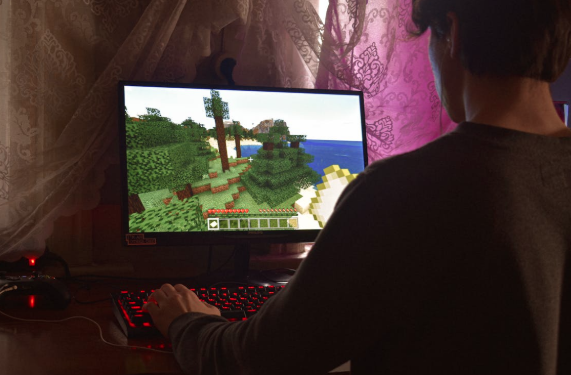
The rise of competitive gaming challenges has turned digital difficulty into a product that millions of players actively seek out and willingly pay for. What began as optional bonus content has evolved into a driving force behind purchasing decisions, playtime commitments, and personal identity.
Hard achievements attract a specific kind of player: one motivated not just by fun, but by the need to prove something. Whether chasing a platinum trophy with a 0.1% unlock rate or paying entry fees for ranked esports tournaments, these players treat difficulty as the point, not the obstacle.
Understanding why gamers pay real money for the hardest challenges requires looking at neurochemistry, social signaling, developer design strategy, and the psychology of effort. For players deep in OSRS endgame content, unlocking an Infernal Cape carries exactly this kind of weight: a credential recognized instantly by anyone who knows how brutal the grind really is.
Competitive gaming challenges cover a wide spectrum: solo achievement hunting (platinum trophies, 100% completions), no-hit boss runs, speedruns, and paid esports tournaments. Despite their differences, all share one driver: prestige earned through difficulty.
The global gaming industry now exceeds $200 billion in annual revenue, with esports projected to grow substantially through 2026. Prestige-based play sits at the center of this growth because difficulty-gated content drives longer engagement, repeat spending, and community loyalty.
The paradox is striking. Most casual players never finish the games they buy, yet a motivated minority actively seeks out and pays for the hardest experiences available.
Competitive challenges take several distinct forms:
Ranked esports ladders (League of Legends, Valorant)
Challenge DLC and hard-mode-only achievements
No-hit run communities
Paid coaching and skill mentorship
Speedrun events and time-attack competitions
Each form demands real investment, whether time, money, or both.
Hard achievements feel more rewarding than easy ones for two distinct reasons: neurochemical reinforcement and social identity. These mechanisms work together, making difficulty itself the core product that players seek out and pay for.
The brain responds more strongly to unpredictable, delayed rewards than to guaranteed ones. In gaming, earning a platinum trophy in Celeste after dozens of failed attempts produces a far more intense dopamine response than clearing a tutorial. The harder the obstacle, the greater the neurochemical payoff when it finally falls.
This dynamic connects directly to the effort justification effect, rooted in cognitive dissonance theory. When players invest significant time, money, or frustration into a challenge, they unconsciously increase its perceived value to justify that investment. A player who grinds ranked matches for weeks feels compelled to continue, because stopping would mean admitting the cost was not worth it.
Psychologist Mihaly Csikszentmihalyi's flow state concept explains another layer. Games like Dark Souls and Elden Ring are designed to hold players at the precise edge of their competence, producing deep absorption that low-stakes games rarely achieve. That state is genuinely addictive in neurological terms.
This is where spending behavior enters. Because harder challenges produce stronger neurological rewards, players willingly pay for the game, for coaching, or for ranked access before a single attempt is made.
Public achievement systems on PSN, Xbox Live, and Steam transform private accomplishments into community-visible signals. A trophy with a 0.1% unlock rate communicates skill, patience, and identity to every player who views that profile. The digital badge becomes a credential.
For many players, gamerscore totals and platinum counts are a primary form of self-definition within gaming culture. Completionist and platinum collector identities are real, sustained motivations that drive spending on games, DLC, and coaching regardless of the underlying fun factor.
This social dimension also produces a credibility hierarchy. Achievement hunters actively debate whether guide-assisted runs, exploit use, or easy-mode completions "count." The community policing is intense because social recognition, not the badge itself, is the actual reward.
A recurring argument in achievement communities holds that overcoming the challenge IS the reward. The trophy is only a symbol, and its value collapses if the underlying difficulty was bypassed.
But this creates a fascinating tension: the harder and rarer the achievement, the more social capital it generates, and the stronger the incentive to pay for any edge that makes completion possible.
Spending on difficulty takes more forms than most players realize, and none of them are accidental.
The most straightforward form is purchasing prestige-difficulty titles directly. Players buy Elden Ring, Dark Souls, and Sekiro knowing the difficulty is the product. The $60–70 price tag is explicitly a payment for suffering, mastery, and eventual reward.
Beyond the initial purchase, a parallel infrastructure demands ongoing spending. Ranked season passes in League of Legends and Valorant, esports tournament entry fees, and challenge ladder access all require real money to unlock the right to compete at higher tiers.
Coaching markets follow the same logic. Fighting game mentorship, speedrun communities, and OSRS skill coaching all charge for the knowledge needed to reach elite-difficulty content. The greater the financial investment, the more meaningful the eventual achievement feels. For Old School RuneScape players targeting one of the game's most coveted milestones, the Infernal Cape service from Tons of XP offers expert-guided access to content that genuinely stops most players cold.
Developers have taken notice. Challenge-gated DLC, exclusive cosmetics tied to hard completions, and ranked modes all monetize the credibility economy directly.
Some achievements exist not to be completed, but to be attempted. A handful have become benchmarks precisely because their unlock rates hover near zero and the demands they place on players go far beyond patience.
"Seriously 5.0" in Gears of War 5 requires hundreds of hours across ranked multiplayer and PvE progression modes. Its statistical rarity makes it one of the most cited examples of time-investment difficulty in gaming history.
Elden Ring and Sekiro present a different category entirely. No-hit boss run completions demand near-perfect mechanical execution. A single input error resets everything, making precision-based achievements fundamentally harder than any grind.
Gran Turismo's endurance trophies add a physical dimension. Certain races demand continuous real-time play spanning multiple days without pause, making the challenge as much about mental stamina as driving skill.
Players pursuing achievements at this level routinely invest in hardware upgrades, paid coaching, and tight-knit communities built around that specific challenge. The rarity is the point, and it justifies every dollar spent reaching it.
Achievement systems are not designed by accident. Studios apply behavioral psychology principles directly: variable reward schedules, visible unlock rates, and tiered difficulty structures all serve measurable retention and monetization goals.
The battle pass model demonstrates this most clearly. Epic Games gates prestigious Fortnite cosmetics behind hard seasonal challenges tied to paid passes, while Bungie links Destiny 2 titles and exclusive gear to difficult completion milestones within paid expansions. Difficulty is packaged and priced deliberately.
Ranked competitive modes follow the same logic. In League of Legends and Valorant, climbing skill ladders drives players toward coaching tools, premium account features, and third-party training platforms. The social value of a high rank creates sustained spending pressure because the reward only exists within a competitive hierarchy.
A real tension exists here, however. Accessibility features like difficulty sliders and assist modes broaden player bases, yet they can erode the credibility economy that makes rare achievements socially valuable. Developers must protect both audiences without letting one cancel the other out.
Achievement hunting exists on a wide spectrum. At the healthy end, it reflects genuine mastery motivation and deep engagement with a game's systems. At the compulsive end, players openly describe missing sleep and neglecting responsibilities in pursuit of a digital badge.
The optimization paradox sits at the core of this behavior. Many players who seek the hardest challenges immediately neutralize that difficulty through guides, spreadsheets, and community meta-builds. They chase the neurological reward of conquering something hard without facing genuine difficulty. It is a fascinating contradiction: paying for prestige while systematically removing the thing that creates it.
This connects directly to a question that surfaces constantly in gamer communities: why keep playing a game you hate just to get the achievement? The sunk-cost fallacy and the effort justification effect combine into a compulsive loop. The more time invested, the harder it becomes to stop, regardless of whether enjoyment remains.
The accessibility debate sharpens this tension further. When Dead Cells introduced assist modes, parts of the community argued it undermined achievement credibility, because social value depends on difficulty being real and shared.
Burnout is the most honest outcome. When challenge-based rewards transform play into work, intrinsic enjoyment collapses. Optimization kills fun. That cost rarely appears in the achievement description.
No single title holds universal consensus, but three stand out. "Seriously 5.0" in Gears of War 5 demands hundreds of hours of ranked progression with a near-zero unlock rate. Elden Ring and Sekiro no-death completion runs require near-perfect execution across entire playthroughs. Gran Turismo's endurance trophies demand real-time sessions spanning multiple consecutive days, making them as physically grueling as they are technically demanding. Each represents a different category of difficulty: time investment, precision, and raw endurance.
Payment takes several forms: buying prestige-difficulty titles like Dark Souls or Elden Ring, paying for ranked esports access, purchasing challenge DLC, or investing in coaching services. Each form triggers the same psychological mechanism. Because greater cost increases perceived investment, the eventual reward feels proportionally more valuable. The effort justification effect means spending money on a challenge actively makes completing it feel more meaningful, not less.
Most casual players move on before reaching the credits, making completionists and achievement hunters statistically rare. That rarity is exactly what gives their accomplishments social weight. Because so few players ever finish a game fully, those who pursue every hard achievement on top of that form a tight-knit, mutually respected community where difficulty is the shared credential.
Rare achievements carry no direct monetary value, but they generate significant social capital within gaming communities. Top achievement hunters convert that recognition into income through streaming, content creation, and coaching. In competitive esports, tournament wins carry real prize money, so value depends entirely on format and how far a player takes their reputation beyond the game itself.
Yes, and the debate is ongoing. Games like Dead Cells sparked real community conflict when accessibility options were added, with hardcore players arguing that difficulty assists undermine the credibility of hard-earned completions. Most achievement hunters hold a consistent position: the digital badge is only meaningful because the difficulty was genuine. The challenge itself is the reward, not the icon.
For players who understand that the challenge is the credential, every hard-earned milestone carries real weight. That same mindset drives a dedicated community of OSRS players who pursue the game's most demanding content, from Raids to the iconic Infernal Cape completion, where only the most skilled and persistent players ever succeed.
Tons of XP exists for players who take that pursuit seriously. With a team of vetted OSRS experts, 24/7 support, and a strict no-bot policy, Tons of XP helps players reach the achievements that genuinely matter, without compromising account security or the integrity of the grind.
If you enjoy PWInsider.com you can check out the AD-FREE PWInsider Elite section, which features exclusive audio updates, news, our critically acclaimed podcasts, interviews and more by clicking here!