
Want more wrestling news, rumors, and results? Be sure to visit PWInsider.com and PWInsiderXtra.com.
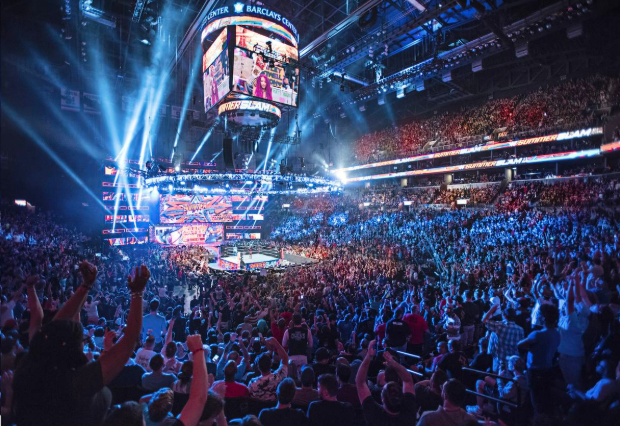
WWE’s confirmation that WrestleMania 42 will take place at Allegiant Stadium on April 18 and 19, 2026, signals a deliberate evolution in how the company approaches its most valuable annual asset. Rather than treating WrestleMania as a single weekend attraction, WWE is deploying a full-scale Las Vegas Residency model designed to maximize economic output, compress operational risk, and extend fan engagement across multiple monetization layers. For the PWInsider.com audience, this move offers a revealing look at how sports-entertainment economics, municipal investment, and audience behavior intersect at the highest level of the business.
WWE’s decision to stage WrestleMania at Allegiant Stadium in consecutive years—2025 followed immediately by 2026—is a historic deviation not seen since 1989. This back-to-back hosting arrangement underscores how Las Vegas has evolved into a uniquely reliable event market capable of absorbing massive attendance while delivering predictable financial results. Unlike cities that require WWE to rebuild logistical frameworks annually, Las Vegas offers a repeatable infrastructure model where transportation, security, hospitality, and broadcast operations are already aligned with global-scale events.
Allegiant Stadium functions as a stabilized asset within this equation. Its modern construction, premium seating inventory, and broadcast-ready design allow WWE to optimize revenue per seat without absorbing new setup costs. From a financial standpoint, the venue becomes a known variable rather than an operational gamble, enabling WWE to redirect capital and planning resources toward fan-facing experiences and sponsor integrations rather than contingency logistics.
Scheduling WrestleMania 42 for April 18 and 19, 2026 places WWE’s flagship event within one of Las Vegas’ strongest tourism windows. Spring travel demand historically drives elevated hotel occupancy, increased discretionary spending, and longer average stays across the city. This alignment allows WWE to benefit from existing visitor momentum while simultaneously amplifying it, creating a symbiotic relationship between WrestleMania and the broader Las Vegas economy.
The two-night WrestleMania format further enhances this strategy by extending fan engagement across multiple days rather than concentrating spending into a single evening. Fans are incentivized to arrive earlier and remain in-market longer, increasing expenditures on food, beverage, transportation, merchandise, and entertainment. For WWE, this structure sustains attention across broadcast and digital platforms while providing sponsors with a longer activation runway tied directly to WrestleMania programming.
At the core of the Las Vegas Residency strategy is the Las Vegas Convention and Visitors Authority’s $6 million sponsorship commitment. This investment is anchored in clearly defined economic projections rather than speculative enthusiasm. According to LVCVA estimates, WrestleMania 42 is expected to generate more than $200 million in economic activity while producing approximately 140,000 incremental hotel room nights throughout the city.
These figures position WrestleMania as one of the most impactful single-event tourism drivers on Las Vegas’ annual calendar. The $6 million sponsorship reflects confidence in WWE’s ability to deliver measurable returns across lodging, dining, transportation, and retail sectors. When weighed against the projected $200 million impact, the sponsorship illustrates why Las Vegas continues to pursue long-term partnerships with global sports-entertainment brands rather than one-off event bids.
WWE World at the Las Vegas Convention Center, scheduled from April 16 through April 20, 2026, transforms WrestleMania from a two-night showcase into a five-day economic ecosystem. By centralizing fan activity in a controlled environment, WWE creates sustained engagement that encourages repeat transactions and extended dwell time. This model captures discretionary spending that might otherwise disperse across unrelated city attractions.
The Convention Center setting provides scalability for high-volume attendance while allowing WWE to curate premium, brand-aligned experiences. Instead of relying solely on live matches, WWE World functions as a monetization engine where fans interact with talent, media, and historical exhibits. Each additional day reinforces the revenue arc, smoothing spending patterns across WrestleMania week rather than relying on a single peak.
The Las Vegas Residency model is engineered around the “Super Fan,” a demographic defined by a high willingness to invest in access, exclusivity, and nostalgia. WWE World programming—including roundtable discussions, live podcast recordings, and the “Hulkamania Forever” exhibit—is designed to deepen emotional attachment while increasing per-capita spend. These experiences convert fandom into tangible economic value rather than passive viewership.
Legacy-driven attractions like “Hulkamania Forever” tap into decades of brand equity, drawing multigenerational audiences who associate WrestleMania with personal history. Live podcasts and interactive discussions blur the line between performer and spectator, creating moments that feel exclusive and time-sensitive. This emotional proximity directly correlates with higher merchandise sales, premium upgrades, and repeat attendance throughout the five-day takeover.
WrestleMania audiences increasingly consume the product through multiple channels simultaneously, making second-screen engagement a critical component of the modern viewing experience. Social media interaction, live commentary, and data-driven platforms enhance real-time participation and extend attention beyond the broadcast itself. During high-stakes event weeks, industry leaders often reference FanDuel Sportsbook promos as a benchmark for understanding how peak attention can be translated into measurable user engagement.
Promotional offers that include up to $300 in bonus bets demonstrate how major platforms capitalize on moments of heightened interest to acquire and educate new users without altering the core entertainment experience. These engagement tools provide valuable insight into audience behavior during WrestleMania week, offering real-time indicators of attention density and market activation during the Road to WrestleMania.
The residency format enables sponsors to integrate across physical venues, digital platforms, and broadcast windows simultaneously, creating layered exposure that traditional touring events struggle to replicate. Brands gain visibility not only during WrestleMania’s two-night main event, but throughout WWE World, ancillary programming, and pre-event media coverage tied to WrestleMania week.
This sustained presence strengthens sponsor retention by delivering engagement over multiple days rather than a single broadcast window. Digital activations and real-time analytics allow partners to assess performance as the week unfolds, reinforcing the value of premium sponsorship tiers associated with WWE’s most powerful annual property.
The projection of 140,000 incremental hotel room nights highlights why Las Vegas continues to outperform competing markets for mega-events. WrestleMania-driven demand fills both Strip resorts and off-Strip properties, distributing economic impact across the city’s hospitality ecosystem. For WWE, negotiated room blocks provide cost certainty while ensuring fans have access to accommodations across multiple price tiers.
Length of stay is a critical multiplier in this model. Fans arriving for WWE World on April 16 and staying through WrestleMania on April 18 and 19 extend booking durations, increasing revenue per visitor. This pattern reinforces the residency strategy’s ability to generate sustained economic activity rather than short-term spikes.
Returning to a proven host city allows WWE to mitigate risks associated with transportation delays, staffing shortages, and regulatory complexities. Las Vegas’ extensive experience hosting large-scale events acts as an operational stabilizer, particularly at a time when production and labor costs continue to rise.
Familiarity with local vendors, venues, and municipal agencies reduces uncertainty and improves execution efficiency. This predictability enables WWE to allocate resources toward enhancing fan experience and content delivery rather than absorbing costs tied to first-time market challenges.
WrestleMania 42 serves as a real-time test of whether concentrated residencies represent the future of WWE’s global touring strategy. If the projected $200 million economic impact and the $6 million sponsorship framework deliver as expected, the model could reshape how WWE assigns its most valuable events. Instead of rotating annually, flagship properties may increasingly anchor themselves in entertainment hubs capable of supporting multi-day takeovers.
Las Vegas’ role in this evolution positions the city not merely as a host, but as a strategic partner in WWE’s long-term growth. WrestleMania becomes less of a traveling spectacle and more of a fixed economic engine, redefining how sports-entertainment’s biggest weekend generates value across the entire industry.
If you enjoy PWInsider.com you can check out the AD-FREE PWInsider Elite section, which features exclusive audio updates, news, our critically acclaimed podcasts, interviews and more by clicking here!